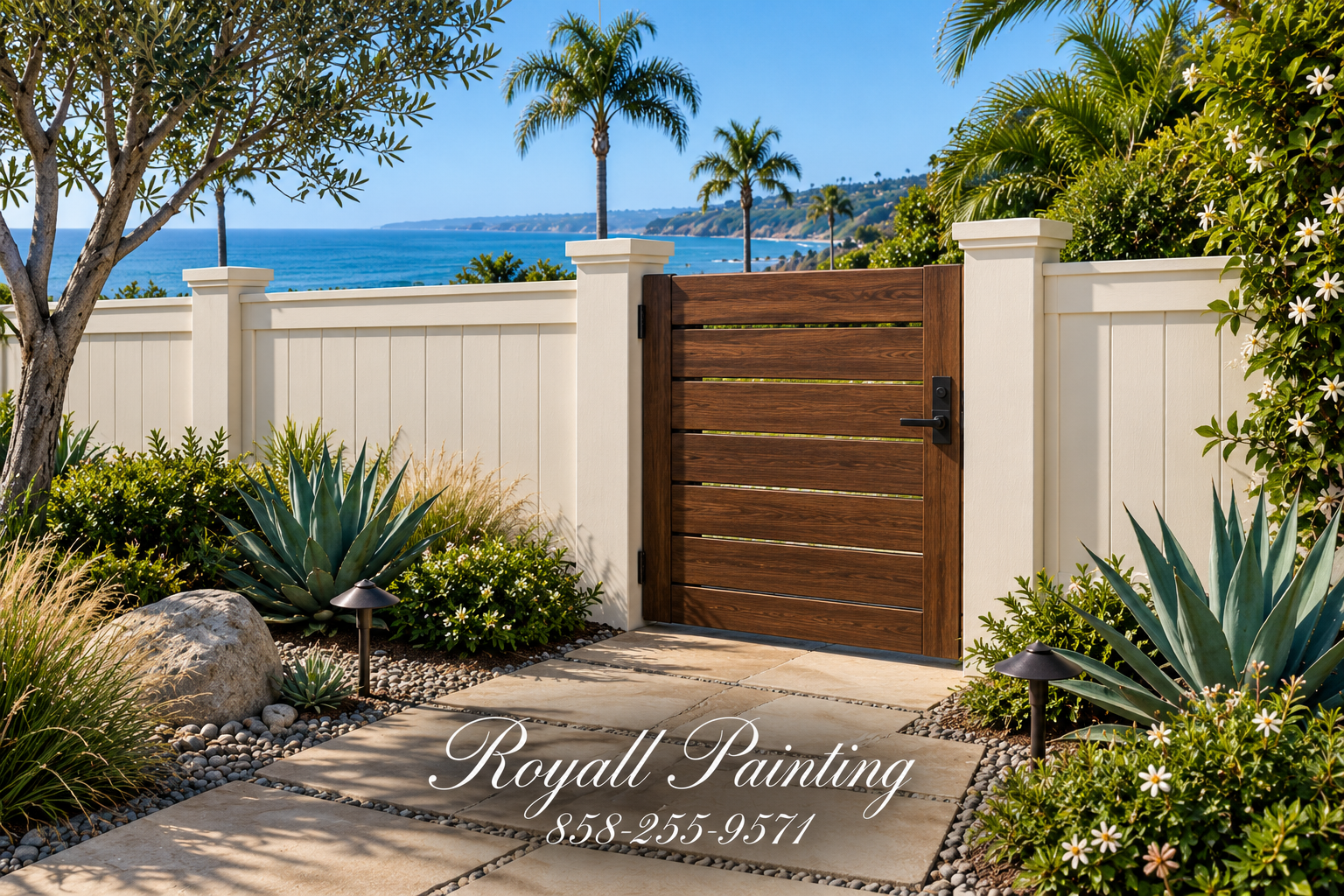
A fence or gate can need attention even when the rest of the exterior still looks good. Before planning fence painting in San Diego, start with the material, the existing finish and the areas you actually want included. Those details make the estimate conversation more useful than choosing a color alone.
Start with the material and the existing finish
Describe whether the fence and gate are wood, metal or another material. If you know what was used previously, share the product name or a photo of the container. Include close-up pictures of peeling, worn areas and changes in appearance. A coating system should be selected for the actual surface and existing finish.
Wood and metal should be discussed separately, even when they sit beside each other. A wood fence with a metal gate may involve different preparation and products. If the material or old coating is uncertain, make that a question for the assessment.
For wood, decide how much grain you want to see
Paint gives an opaque color. Exterior wood stains offer different levels of opacity: translucent finishes show more grain, while solid stains conceal more of the wood's color. The existing coating and the wood's condition affect the options. Compare a sample on the actual surface before deciding. Benjamin Moore's fence-staining guide explains the opacity choices.
Look at condition before choosing a new color
Photograph loose or peeling finish, weathered boards, damaged sections and areas around posts and hardware. Separate a finish problem from a repair question: a new coating does not straighten a sagging gate or replace a damaged board. Identify repairs you want assessed rather than assuming they are included in the painting price.
Clean, dry surfaces and suitable preparation matter before coating wood. Drying time and application conditions depend on the product and the site. Sherwin-Williams' wood-fence painting guide discusses cleaning, preparation and drying; the chosen product's instructions should govern the actual work.
Make the included surfaces clear
One side of a fence is a different scope from both sides. Posts, rails, lattice and gate details can also change the work. Before comparing estimates, write down:
- The fence sections and gates you want included, with approximate length and height if available.
- Whether the work covers one side or both, including posts, rails and accessible edges.
- Areas where you want repairs or preparation assessed.
- The color or finish you have in mind, plus any choices still undecided.
- Access, planting, nearby vehicles and daily use of the gate that need discussion.
Send photos that show the whole project
Start with a wide view of each fence run, then add close-ups of the surface and any areas of concern. Photograph both sides when both are part of the request. Include the gate, its frame and the surrounding access. Note which areas belong to your project and whether access to the other side needs to be arranged.
If the fence is part of a larger repaint, list it separately from the house walls and trim. That helps you compare the same included work across estimates. Our painting-estimate comparison guide explains the other details worth reviewing.
Discuss your fence or gate project
Use Royall Painting's existing free virtual estimate form to share the material, the surfaces, their condition and project photos. Include your location and any timing or access concerns so the proposed scope can be discussed.
For a wider exterior project, see our exterior painting information for San Diego. Product selection, preparation, repairs and project arrangements should be confirmed for your property.